Just north of the Mississippi Gulf Coast’s estuarine landscape, the Lyman Hatchery at the Mississippi Department of Marine Resources (MDMR) operates a multifaceted mission: to enhance native aquatic stocks, conserve vulnerable species and support ecosystem resilience through science-driven aquaculture projects. With its deep commitment to ecological stewardship, the hatchery plays a role in supporting both commercial and recreational fisheries, while advancing habitat restoration and species recovery in Mississippi and beyond.
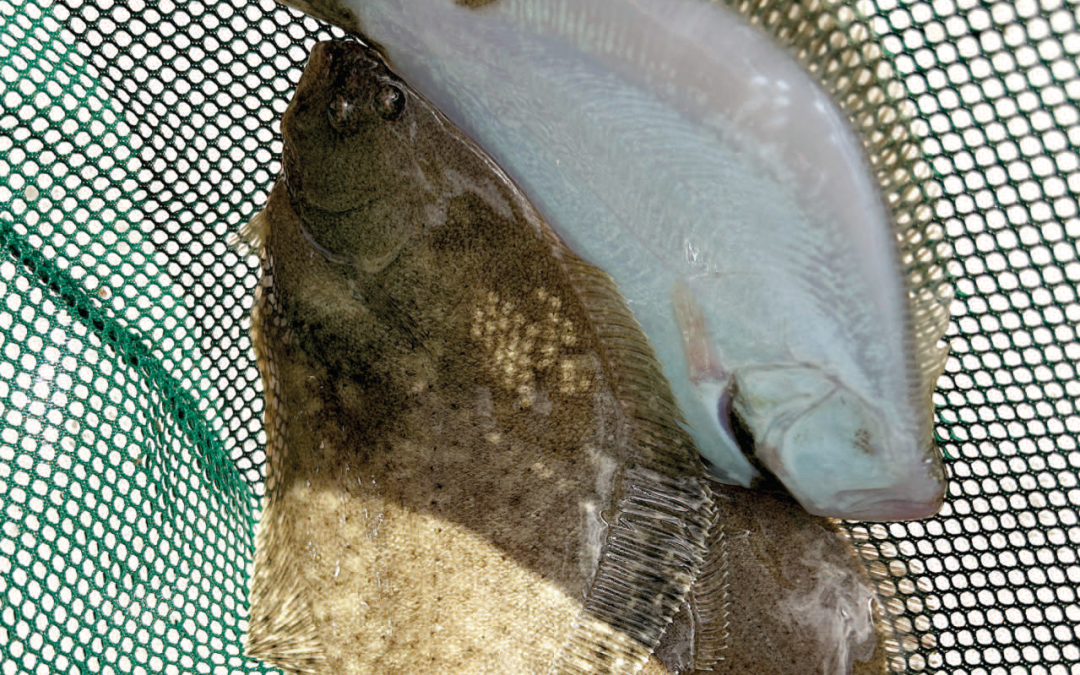
At the core of the Hatchery Bureau’s work is stock enhancement of sport fish, notably Spotted Seatrout (Cynoscion nebulosus) and Southern Flounder (Paralichthys lethostigma). These efforts are designed to help enhance wild populations that undergo increasing fishing pressure, habitat loss and environmental change.
These efforts are done in collaboration with the University of Southern Mississippi’s Gulf Coast Research Laboratory through spawning, rearing and release programs, to ensure healthy juvenile fish are released in coastal waters. These releases not only aim to support fisheries but also help maintain ecological balance within estuarine food webs.
Beyond finfish enhancement, the Hatchery Bureau engages in an array of conservation and aquaculture partnerships. Former projects headed by the MDMR and the Grand Bay National Estuarine Research Reserve have included final grow out, tagging and release of Diamondback Terrapins (Malaclemys terrapin), a marsh-dwelling turtle and species of concern in Mississippi. Experiments with Northern Quahog Clam (Mercenaria mercenaria) included testing culture techniques and distribution for research, supporting efforts for possible restoration. These bivalves serve as natural filters, improving water clarity and nutrient cycling, which are ecosystem services that benefit both marine life and coastal communities.
The Lyman Hatchery is currently the location for work done with the Dusky Gopher Frog (Lithobates sevosus), a critically endangered amphibian primarily found in Mississippi. This work is a collaboration with U.S. Fish and Wildlife Service, the Mississippi Department of Wildlife, Fisheries, and Parks, and Western Carolina University, focused on areas across southern Mississippi.
Experiments in the past have also included research with the Mississippi State University Extension focused on the Atlantic Oyster Drill (Urosalpinx cinerea). Oyster drills are found in intertidal zones and shallow tidal areas primarily preying on the Eastern Oyster (Crassostrea virginica), deterring shellfish growers, harvesters and restoration efforts.
Currently, the hatchery is cultivating Black Needlerush (Juncus roemerianus), a native coastal plant integral to marsh stabilization and shoreline protection. Black needlerush seedlings are propagated and distributed to restoration projects, where their dense root systems help reduce erosion, enhance sediment accretion and support wildlife habitat.
Extended efforts by the hatchery are aimed at supporting local communities to help in promoting conservation and sustainability. Hatchery biologists regularly assist with the live release of fish after local tournaments. Equipped with specialized tanks and aeration systems, the hatchery ensures that fish caught during events are kept healthy and returned safely to their natural habitats. This effort not only supports local ecosystems but also fosters responsible fishing practices within the community, encouraging anglers to balance recreation with environmental stewardship.
In addition to its outreach conservation efforts, the hatchery partners with local high schools to support aquaculture education programs. Students gain hands-on experience in fish husbandry, water quality management and hatchery operations, helping them develop valuable skills in biology and environmental science. By blending community service with education, the hatchery serves as both a resource for sustainable fisheries and a learning hub that inspires the next generation of environmental scientists.
This combination of projects exemplifies the MDMR Lyman Hatchery’s comprehensive approach: blending restoration ecology, sustainable aquaculture and community engagement. By advancing science-based practices and nurturing partnerships across government, non-profit, stakeholders and academic sectors, the hatchery not only helps strengthen local fish populations but also fosters resilient ecosystems for future generations.
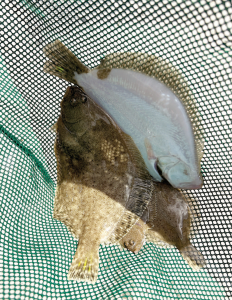 Hatchery-raised Southern Flounder: Hatchery-raised Southern Flounder marked with yellow Visible Implant Elastomer (VIE) tags prior to release into the Mississippi Sound and adjacent estuaries. VIE tags are thin, colored lines injected just beneath the skin of the tail fin. Long-lasting and visible for several years, these tags allow MDMR biologists to monitor survival of stocked fish and strengthen future stock enhancement efforts.
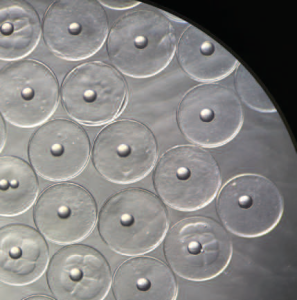
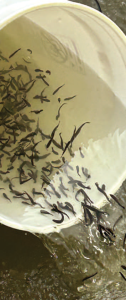
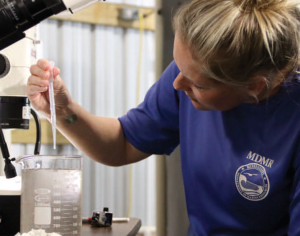
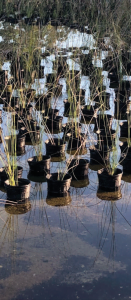
Additional photos: Flounder strip spawning; Flounder eggs under a microscope; Hatchery-raised Spotted Seatrout; Preparing larval counts; Black Needlerush.